Homeless Activism
The needs of homeless are critical. Their ranks are increasing daily as state prisons are releasing thousands onto our streets. These have no income, and no place to live. Thousands of others become homeless because they can no longer pay rent or make house payments.
The other jaw of this vice is that state welfare and nonprofit sources of aid are drying up. Still, there are many individuals in our churches who desire to help, but have no idea how. This page is an attempt to identify needs and opportunities.
It would surprise many to find that some homeless camps have well-understood systems of government that protect their residents and administrate resources. Whatever is done must be done with respect, and a servant's heart. Do not consider visiting their camps without permission. It is always wise to seek out those who have their permission and respect, for consultation and coordination of efforts. It is also significant that 60% of homeless grew up in foster care, until dumped at age 18, and 30% of them have been involved in mental health programs.
These demographics are changing, because the homeless ranks are being swelled by the increasing number in dire financial crisis. Another growing source in from the tens of thousands of inmates being released early from state prisons and county jails due to reduced budgets. It is estimated that 80% of released felons will commit additional crimes. If they are not helped, they will help themselves.
General categories of assistance would include.
Equipment an supplies
Service and ministry
Appropriate technologies
Feeding ministries
Other ministries
Equipment and supplies
Many are dumped on the streets with no more than literally the clothes on their backs. Tarps, blankets, sleeping bags and tents are essential to the very survival of some – depending upon the time of year. Any kind of camping gear is a big help.
Nylon tents are great, but a tent that lasts for years while stored in a garage for all but one or two weeks a year, will deteriorate within two or three months under constant usage and exposure to sunlight.
Water, propane and stove fuel, medical and hygiene supplies are in constant need.
Service and ministry
Hauling donated supplies is a good way to become more acquainted with the situations, meet some of the people, and earn a welcome. Collecting their trash, cutting weeds, and general cleanup are also meaningful ways to express the love of Jesus.
When coordinated with local preferences, the application of appropriate technologies can also assist in the development relationships.
As the Lord and opportunity would lead, offering prayer and interactive Bible study can be a help. You can meet all a person's physical needs, but if you don't touch the heart, you will ultimately become no more than yet another resource to be consumed.
Transportation to medical and government offices is another opportunity for service.
Appropriate technologies
These are strategic technologies based upon a minimum of expense that can improve comfort and safety. In many cases, once people learn how, they can be applied by those in need without further assistance. Others may require key tooling or materials.
|
Categories of technology |
|
|
|
|
|
|
|
|
|
|
|
|
|
|
|
|
|
|
|
Feeding ministries
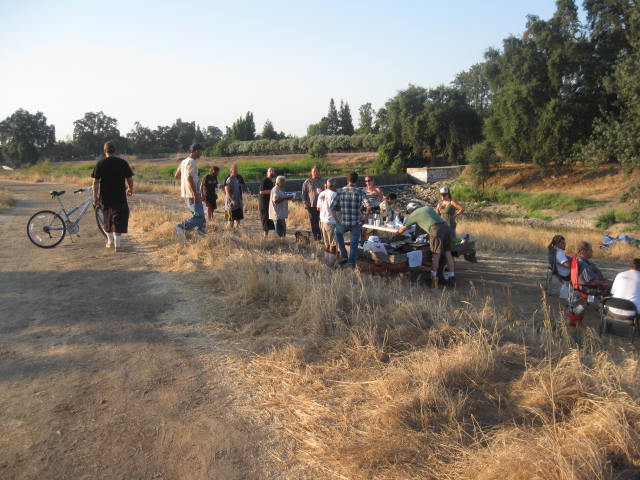
Donations of non-perishable foods are always welcome, and numerous ministries have served meals at their respective facilities, but there seems to be something special about preparing food outdoors within or adjacent to their camps. This sort of activity should be done with their permission, and can be a great time for relaxed communication.
In this photo, breakfast is being served to the “river people.” At this location we have actually obtained their permission to establish a site and build a temporary structure from which donated goods and other services can be administered (resolution is intentionally poor out of respect for identities).
Other ministries
Pray and seek God. Obey and minister with love and respect. Generally speaking, it would be wise to confer with those already serving a specific group, in order to coordinate schedules and resources.