Transportation
Ah the ubiquitous shopping cart. I've been told of a place where close to eighty of them have concluded one-way trips to haul groceries and supplies into camps – at a societal cost of thousands I am sure. Keep in mind, that these people don't even have water unless they haul it themselves.
Besides the hauling of groceries etc., they are entry-level utility vehicles for those gathering recyclables. In this second category, I have often marveled at the ingenuity of the wheeled contraptions that sometimes grace our streets.
Because of their small wheels, shopping carts are less than optimum for anything but sidewalks, and though free to those who steal them, they are not cheap to those who own and deserve them.
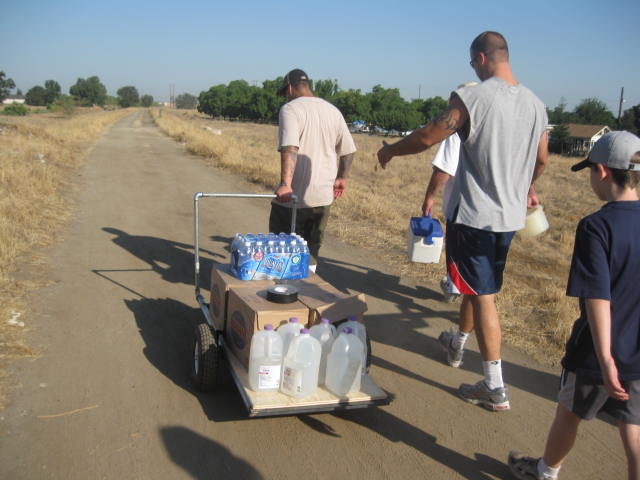
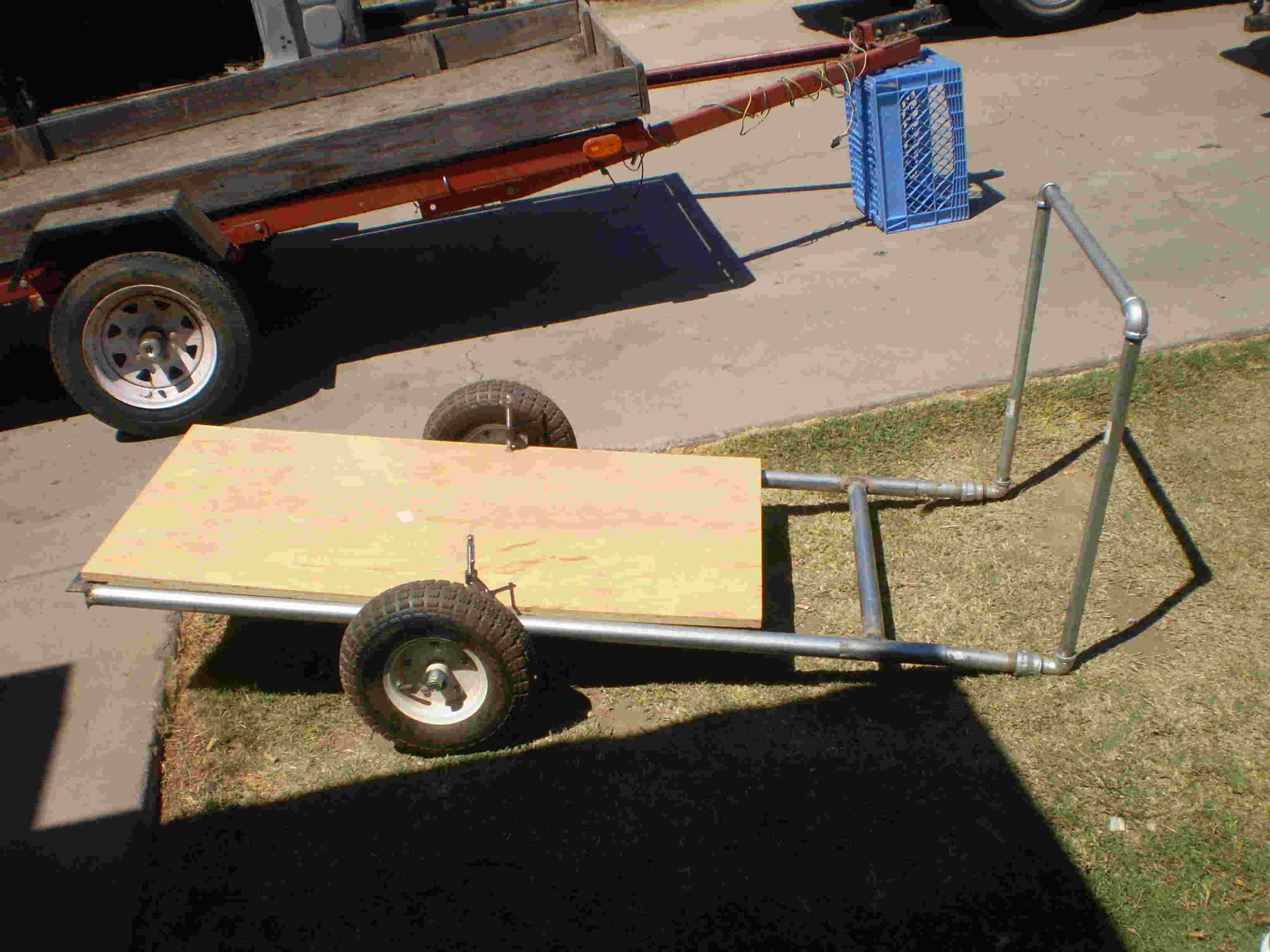
Clearly, we have a strategic opportunity here. A cart with larger wheels that could haul a few hundred pounds could serve a group of people coordinating a shopping event, or haul donations into a homeless camp. Such is the service of the cart shown here.
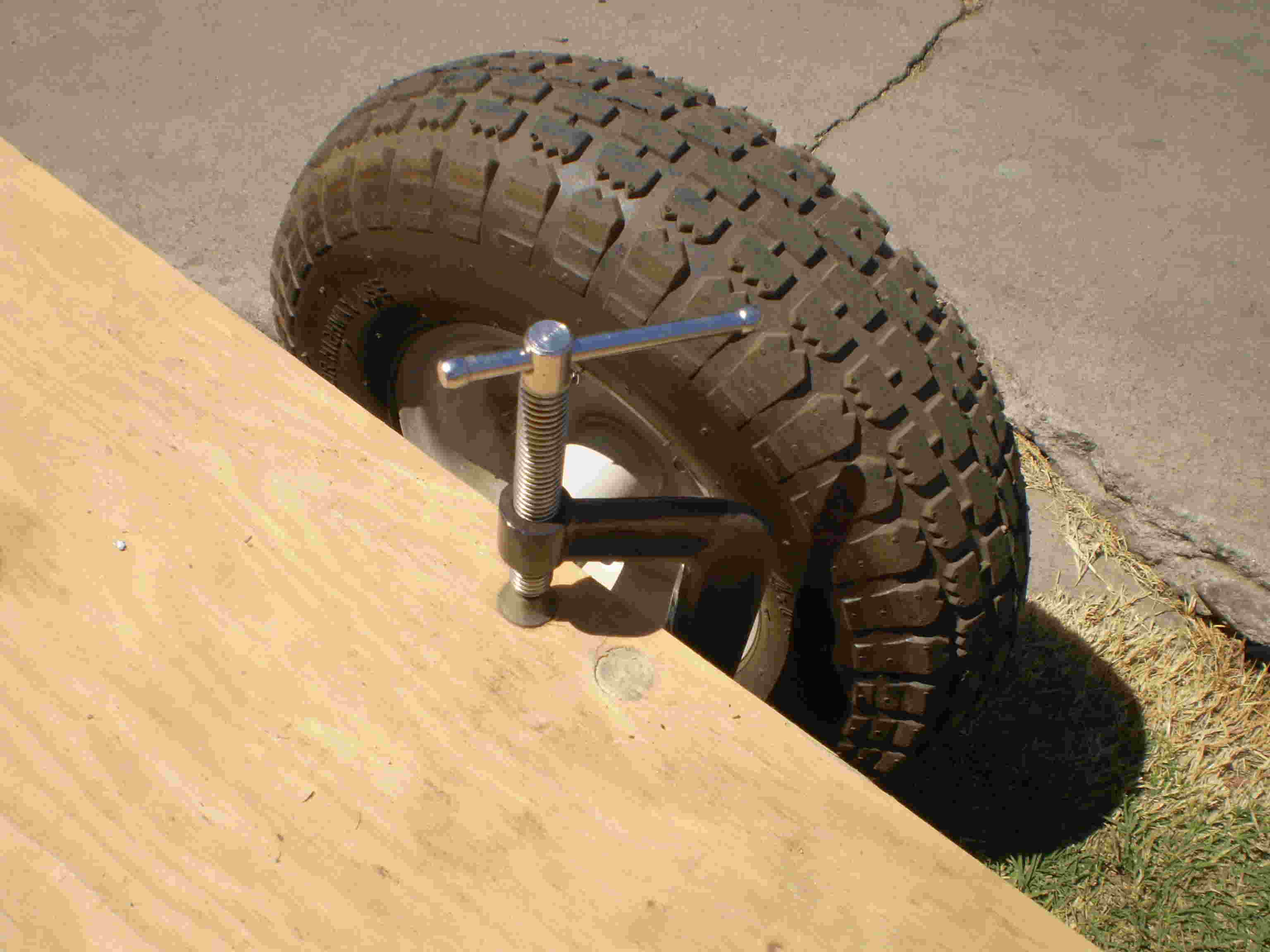
The axle was based upon a couple wheelbarrow wheels with a load rating of 350 lbs apiece. The ends were cut off a couple 5/8” bolts so they could be welded to the inside corner of a piece of angle iron. The bolt length was selected to protrude just far enough to securely mount the wheels. In this case, the overall width was chosen to just pass through a 36” opening.
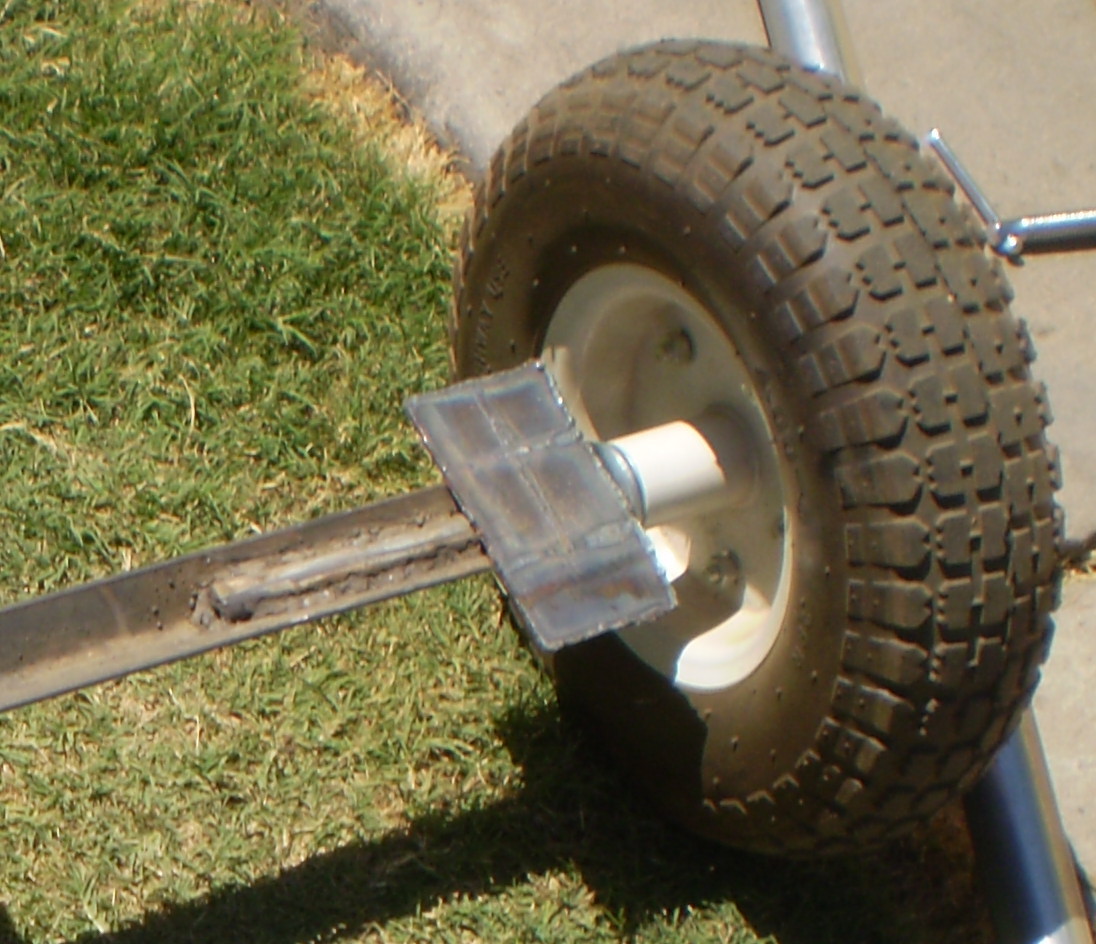
Pads were welded to the ends of the angle iron for mounting the frame.
The frame was welded up from “top rail” material commonly used in chain-link fences. These tubes were left open on one end so that a handle made from common galvanized pipe pieces and fittings could be inserted. Conveniently, since the width of the handle is not exactly the same as the that of the cart frame, the handle is secured by the spring pressure of forcing the handle width into the frame width.
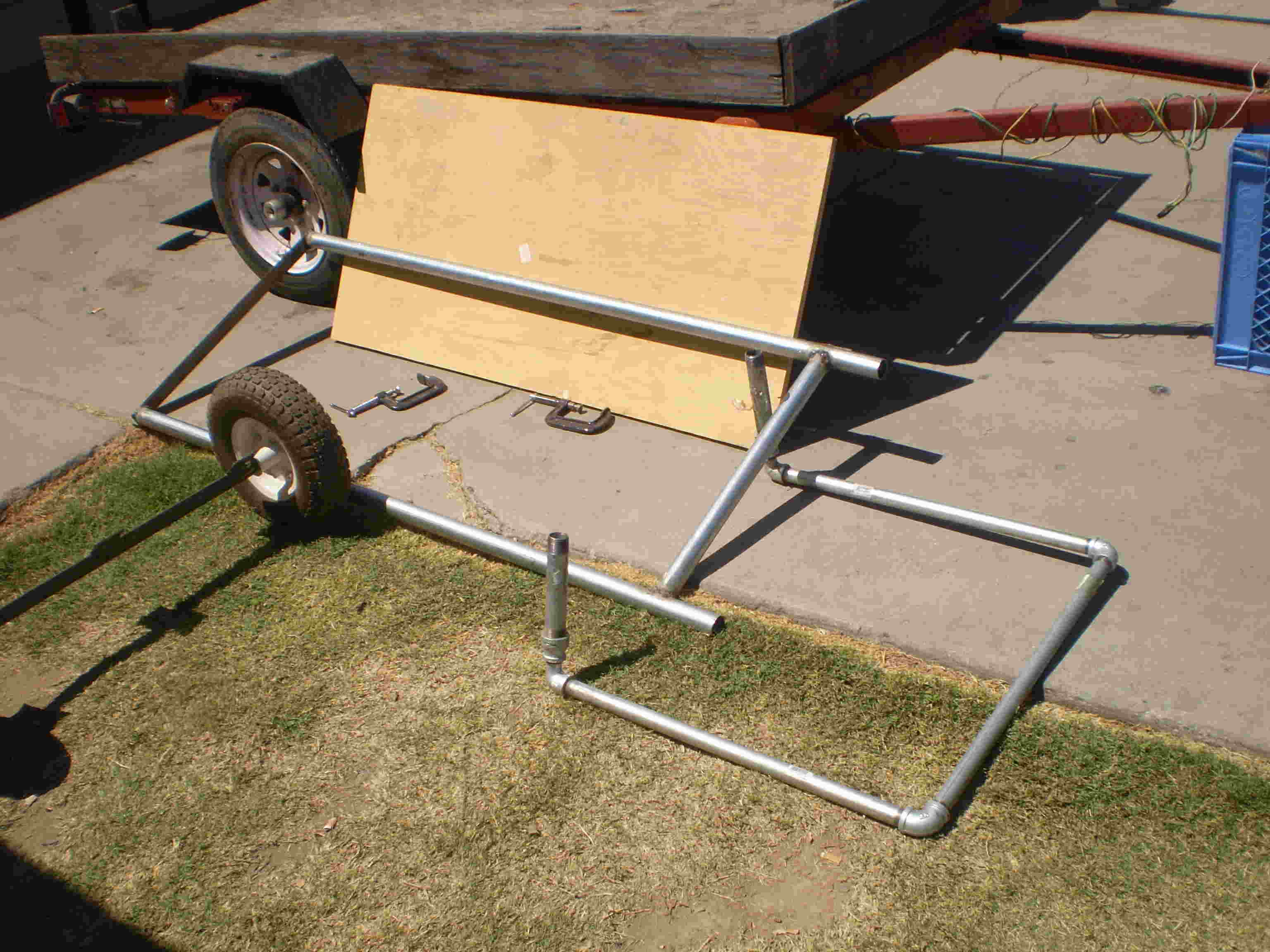
Finally, the entire assembly is held together and mounted to the axle by two 'C' clamps as shown. This disassembly makes it convenient to store or load into a vehicle.
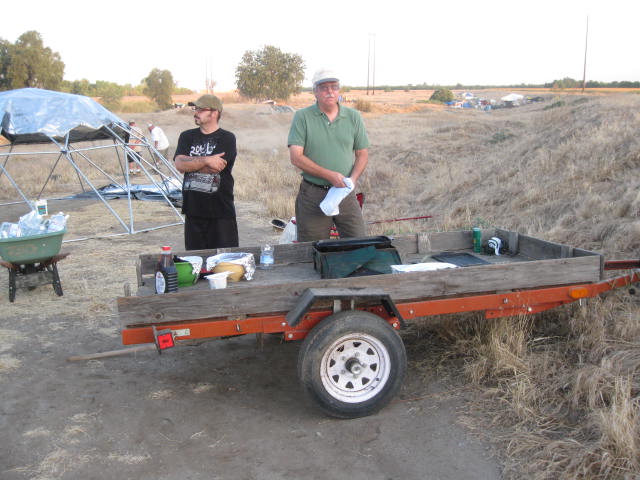
Alternatively, supplies can be hauled into camps by using a small conventional trailer. If distances and loads require it, a trailer hitch could be mounted near the center of the above-described cart, so it could be used to support and steer the trailer.